







Omega-3 and fish oil for dogs: what they are and what the research looked at
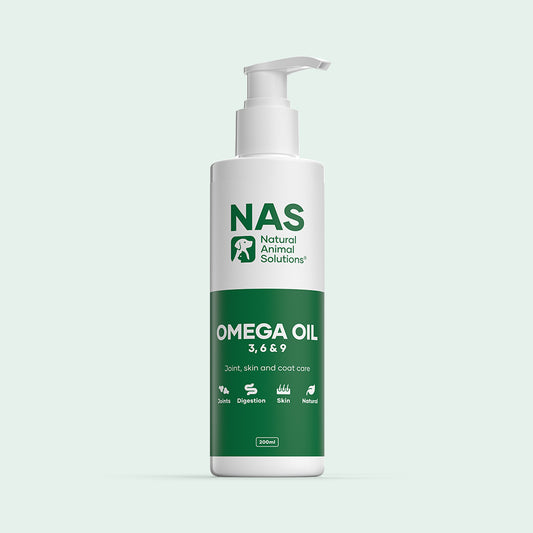
The search "dog supplements omega 3" covers several different ingredients. Fish oil, salmon oil, algal oil, flaxseed and green-lipped mussel all contain omega-3 fatty acids, but not the same ones [2][3][9]. This guide covers the three main omega-3 fatty acids, their sources, pet food guidelines, labels, storage and documented safety considerations. A separate section at the end describes what canine studies investigated.
The short answer
- Omega-3 is a family of fatty acids. The three that matter on a dog product label are ALA, EPA and DHA [2].
- Flaxseed supplies ALA. Fish oil is the main dietary source of EPA and DHA [2].
- A 2013 veterinary review said the conversion of ALA to EPA and DHA "is believed to be rather limited in dogs" [1].
- AAFCO and FEDIAF set minimum ALA and EPA plus DHA levels in food for growing dogs, and no minimum for adult dogs [3][4][5].
- The same 2013 review lists potential adverse effects of omega-3 supplementation in dogs and cats, including gastrointestinal effects and altered platelet function [1].
- Three trials in client-owned dogs with osteoarthritis reported mixed results: two food trials, each with authors affiliated with a pet food manufacturer, reported differences in owner ratings or in medication dose, and an un-commissioned fish oil trial found no major statistically significant benefit over placebo [10][11][12].

What are omega-3 fatty acids?
Fatty acids are grouped by the position of the first double bond counted from the methyl, or omega, end of the carbon chain. In an omega-3 fatty acid that first double bond sits between carbons 3 and 4 from the omega end; in an omega-6 it sits between carbons 6 and 7 [2].
Three omega-3 fatty acids appear on dog food and supplement labels [2]:
- ALA (alpha-linolenic acid), an 18-carbon fatty acid.
- EPA (eicosapentaenoic acid), a 20-carbon fatty acid.
- DHA (docosahexaenoic acid), a 22-carbon fatty acid.
EPA and DHA are found primarily in marine sources [2].
Where does the omega-3 in dog supplements come from?
Fish oil. The main dietary source of EPA and DHA [2], and the primary commercial source of omega-3 [3].
Salmon oil. A 2024 review's composition table lists sea-caught salmon oil among the fish oils, with DHA at 13.8% and EPA at 12.0% of total fatty acids [3]. None of the sources opened for this article compared it with other fish oils in dogs.
Algal oil. Algae are the foremost source of EPA and DHA in marine ecosystems. Algal oil is a small part of the market: one estimate put it at 1.8% of the global omega-3 ingredient market by volume in 2018 [3].
Flaxseed. Flaxseed, camelina and canola oil are sources of ALA [3]. In one composition table, ALA made up 53.4% of the total fatty acids in cold-pressed flaxseed oil [3].
Green-lipped mussel. This mussel is endemic to the coastal waters of New Zealand. A 2018 review lists EPA and DHA among its lipids, alongside furan fatty acids, sphingolipids and phytosterols [9]. That review was funded by the New Zealand Ministry of Business, Innovation and Employment and the Cawthron Institute, and its authors declared that they work with researchers from the aquaculture industry on breeding programmes [9].
Can dogs turn flaxseed ALA into EPA and DHA?
Only to a limited extent, according to the reviews we opened. Lenox and Bauer wrote that the conversion rate of ALA to EPA and DHA "is believed to be <10% in humans, and also is believed to be rather limited in dogs" [1]. A 2024 review in the Journal of Animal Science stated that ALA cannot maintain tissue EPA and DHA at concentrations equivalent to marine sources [3].
One feeding study tested this directly. In 20 adult Alaskan Huskies, ten per group, given krill oil or flaxseed oil for six weeks, the Omega-3 Index (a measure of EPA and DHA in red blood cell membranes) rose significantly in the krill oil group and fell in the flaxseed oil group; the krill oil producer sponsored the study, supplied the oil and employed all of its authors, and we read the abstract only [7]. It measured a blood marker, not a health outcome.
What do AAFCO, FEDIAF and the NRC say about omega-3 in dog food?
The three bodies give the same figures for growing dogs and differ on adults. These are nutrient levels in complete food on a dry matter basis, not supplement amounts.
| Body and document | Growing dogs | Adult dogs |
|---|---|---|
| AAFCO, 2014 proposed-revisions document | ALA 0.08%, EPA plus DHA 0.05% [4] | Not determined [4] |
| FEDIAF, October 2021 edition | ALA 0.08 g and EPA plus DHA 0.05 g per 100 g dry matter [5] | No level recommended [5] |
| NRC 2006, as tabulated in a 2024 review | ALA 0.08%, EPA plus DHA 0.05% [3] | ALA 0.044%, EPA plus DHA 0.044% [3] |
Each row comes from a specific document, and later editions may differ. The AAFCO figures are from a proposed-revisions document for the AAFCO Dog and Cat Food Nutrient Profiles, dated July 2014 in its file name and attached to a 2015 AAFCO meeting agenda; we did not open the current AAFCO Official Publication [4]. The 2024 review tabulates the same AAFCO growth figures and cites AAFCO 2021 for them [3]. The FEDIAF figures are from the October 2021 edition of its Nutritional Guidelines [5]. The NRC figures are from the NRC's 2006 publication as tabulated in the 2024 review; we did not open the NRC volume itself [3].
AAFCO's footnote explains that although no adult minimum has been determined, enough omega-3 is needed to stay within its maximum omega-6 to omega-3 ratio of 30:1 [4]. FEDIAF's October 2021 guidelines say the current information is "insufficient to recommend a specific level of omega-3 fatty acids for adult dogs" [5].
The NRC also gives a safe upper limit for dogs for combined EPA and DHA: 2,800 mg per 1,000 kcal of diet, as reported in a veterinary review and a clinical nutrition article [1][6]. That is a ceiling for the whole diet, not a target.
How do you read EPA and DHA on a label?
Look for the EPA and DHA figures themselves, not the amount of oil. A veterinary nutritionist writing for clinicians notes that it may be necessary to call the manufacturer to get the EPA, DHA and ALA concentrations [2].
Three things to check:
- Which omega-3. A product listing only ALA or flaxseed is a different thing from one listing EPA and DHA [1][2].
- The basis. Guideline figures are per unit of dry matter or per 1,000 kcal of diet [1][4][5], so a figure per capsule or per pump cannot be compared with them directly.
- The energy. Each gram of oil contains about 9 kcal, and one 5 ml teaspoon about 42 kcal [1].
For how these products are classed and labelled here, see how dog supplements are regulated in Australia.
Storage, oxidation and rancidity
Omega-3 oils oxidise. A 2020 paper on human fish oil supplements listed the factors that affect how much and how fast: fatty acid composition, exposure to oxygen and light, antioxidant content, temperature, and the presence of water and heavy metals [8].
That study tested 44 fish oil supplements sold for people in the United Arab Emirates. It found that 40.9% exceeded the recommended maximum peroxide value and 27.3% exceeded the recommended maximum for total oxidation [8]. These were human products in one market, so the figures cannot be carried across to dog products in Australia.
The fatty acid profile of an ingredient can change over its shelf life depending on how it has been stored [3]. The 2013 review states that adding vitamin E to supplements can decrease lipid peroxidation in the oil, which limits rancidity and extends shelf life [1]. Follow the storage directions and expiry date on the label.
Safety considerations in the veterinary literature
Lenox and Bauer's 2013 review in the Journal of Veterinary Internal Medicine lists these potential adverse effects of omega-3 supplementation in dogs and cats [1]:
- altered platelet function
- gastrointestinal adverse effects
- detrimental effects on wound healing
- lipid peroxidation
- potential for nutrient excess and toxin exposure
- weight gain
- altered immune function
- effects on glycaemic control and insulin sensitivity
- nutrient-drug interactions
What follows is the review's own wording on the points most often asked about. The authors disclosed no conflict of interest [1].
Gastrointestinal effects. The review states that adverse gastrointestinal effects "are seen frequently and are commonly reported in clinical patients supplemented with dietary omega-3 fatty acids" [1].
Platelets. The review describes three dog studies. One fed laboratory dogs diets with differing omega-6 to omega-3 ratios for 12 weeks and "did note small changes in platelet reactivity, but did not consider them clinically relevant". A second, also in laboratory dogs fed for 12 weeks, "saw no significant effects on platelet function". A third, in dogs with naturally occurring lymphoma and haemangiosarcoma fed a diet with fish oil and arginine, "did not see an effect on platelet aggregation or platelet count" compared with dogs with the same cancers fed a control diet [1].
Wound healing. The review describes two dog studies. In one, purpose-bred dogs were fed an omega-3 enriched diet containing menhaden fish oil for 30 days before wounds were made, with the actual dose not reported; those dogs "had less epithelialization of open wounds after 5 days". In the other, researchers made small wounds in purpose-bred dogs and "did not observe an effect of dietary omega-3 fatty acids on wound healing". Writing for clinicians, the authors then state: "it may be wise to discontinue high doses of omega-3 fatty acids (either dietary or supplemental) before surgery to avoid interference with inflammation and wound healing" [1]. That is a decision for the treating vet.
Vitamin E. The review notes one study that found "decreased plasma vitamin E concentration in dogs fed a diet enriched with fish oil" [1].
Contaminants. The review states: "Consumption of high quantities of fish or fish oil can increase exposure to heavy metals such as mercury or chemicals such as polychlorinated biphenyls and polychlorodibenzodioxins." It then adds: "However, it appears that the risk of toxin exposure and related clinical signs is low overall" [1].
What canine studies investigated
This section reports studies only. It is not a statement about any product.
Roush and colleagues, Journal of the American Veterinary Medical Association. In a randomised, double-blinded, controlled trial of 127 client-owned dogs with osteoarthritis at 18 veterinary clinics, dogs fed for six months on a test food with a 31-fold higher total omega-3 content than the control food had significantly higher serum omega-3 concentrations, and their owners rated ability to rise and play as improved at 6 weeks and ability to walk as improved at 12 and 24 weeks compared with control dogs; these were owner questionnaire ratings, several of the authors were affiliated with a pet food manufacturer, and we read the abstract only [10].
Fritsch and colleagues, same journal. In a randomised, controlled trial of 131 client-owned dogs with stable chronic osteoarthritis at 33 veterinary hospitals in the United States, all of them receiving carprofen (a prescription medicine) with the dose reviewed by investigators every three weeks, the carprofen dose decreased significantly faster over 12 weeks in dogs fed a diet with approximately 3.5% omega-3 than in dogs fed a control diet with approximately 0.1%; the abstract does not describe the trial as blinded, and seven of the eight authors were affiliated with the same pet food manufacturer [11].
Hielm-Björkman and colleagues, BMC Veterinary Research, 2012. In an un-commissioned, randomised, double-blinded trial in which 77 client-owned dogs with osteoarthritis received a deep sea fish oil product or corn oil as placebo for 16 weeks, and 71 completed it, the authors reported no major statistically significant benefit over placebo, although the fish oil group improved on many variables against its own baseline [12].
Barbeau-Grégoire and colleagues, 2022. A systematic review and meta-analysis of 57 articles covering 72 trials in dogs and cats with osteoarthritis, 54 of the articles canine, rated the evidence for omega-3 enriched diets and omega-3 supplements as showing efficacy, with 2 of 20 omega-3 trials rated non-effective, and also noted a lack of objective data in studies of these products [13]. For more on this area, see our summary of the joint supplement research.
What the research does not tell us
- Objective measures are scarce. The 2022 meta-analysis noted a lack of objective data in studies of these products [13]. The Hielm-Björkman trial, which included force-plate measures, found no significant difference from placebo on them [12].
- Food is not a supplement. Two of the trials compared a test food with a control food, not oils added to a dog's usual food [10][11].
- Author affiliations. Both food trials had authors affiliated with a pet food manufacturer, and we saw no explicit funding statement on either journal page [10][11].
- Duration. Follow-up ranged from 28 to 180 days across all the product categories in the 2022 review, not the omega-3 trials alone [13].
- Healthy dogs. These trials enrolled dogs with diagnosed osteoarthritis. They say nothing about healthy dogs.
- Access. We did not read the full text of three papers and relied on the abstract or journal page [7][10][11].
When to see your vet
Speak to your vet before adding any omega-3 product if your dog takes any medication or has surgery planned. The 2013 review raises nutrient-drug interactions and effects on wound healing as matters for clinicians to weigh [1]. See your vet promptly if your dog develops vomiting or diarrhoea, bleeds or bruises unexpectedly, or is lame, stiff or in pain. Nothing here is a reason to change a prescribed medicine.
The open question is the adult dog. Two of the three guideline bodies have not set an omega-3 minimum for adults in the documents we opened [4][5], which is a statement about the limits of the data as much as about dogs.
This article is general information, not veterinary advice. Speak to your vet before changing your dog's diet, supplements or medication.
References
- Lenox CE, Bauer JE (2013). Potential adverse effects of omega-3 fatty acids in dogs and cats. Journal of Veterinary Internal Medicine 27(2):217–226. https://academic.oup.com/jvim/article/27/2/217/8451855
- Lenox CE (2016, modified 2022). Role of dietary fatty acids in dogs and cats. Today's Veterinary Practice. https://todaysveterinarypractice.com/nutrition/role-of-dietary-fatty-acids-in-dogs-cats/
- Burron S, Richards T, Krebs G, Trevizan L, Rankovic A, Hartwig S, Pearson W, Ma DWL, Shoveller AK (2024). The balance of n-6 and n-3 fatty acids in canine, feline, and equine nutrition: exploring sources and the significance of alpha-linolenic acid. Journal of Animal Science 102. https://academic.oup.com/jas/article/doi/10.1093/jas/skae143/7679847
- AAFCO (file dated July 2014; attachment to the Midyear 2015 Model Bills and Regulations agenda). AAFCO Methods for Substantiating Nutritional Adequacy of Dog and Cat Foods: proposed revisions to the AAFCO Dog and Cat Food Nutrient Profiles. https://www.aafco.org/wp-content/uploads/2023/01/Model_Bills_and_Regulations_Agenda_Midyear_2015_Final_Attachment_A.__Proposed_revisions_to_AAFCO_Nutrient_Profiles_PFC_Final_070214.pdf
- FEDIAF (October 2021). Nutritional Guidelines for Complete and Complementary Pet Food for Cats and Dogs. https://europeanpetfood.org/wp-content/uploads/2022/03/Updated-Nutritional-Guidelines.pdf
- Raditic D, Gaylord L (2020, updated 2024). Fish oil dosing in pet diets and supplements. Today's Veterinary Practice. https://todaysveterinarypractice.com/nutrition/fish-oil-dosing-in-pet-diets-and-supplements/
- Dominguez TE, Kaur K, Burri L (2021). Enhanced omega-3 index after long- versus short-chain omega-3 fatty acid supplementation in dogs. Veterinary Medicine and Science 7(2):370–377. https://pubmed.ncbi.nlm.nih.gov/33022896/ (abstract only)
- Jairoun AA, Shahwan M, Zyoud SH (2020). Fish oil supplements, oxidative status, and compliance behaviour: regulatory challenges and opportunities. PLOS ONE. https://journals.plos.org/plosone/article?id=10.1371/journal.pone.0244688
- Eason CT, Adams SL, Puddick J, Romanazzi D, Miller MR, King N, Johns S, Forbes-Blom E, Hessian PA, Packer MA (2018). Greenshell mussels: a review of veterinary trials and future research directions. Veterinary Sciences 5(2):36. https://www.mdpi.com/2306-7381/5/2/36
- Roush JK, Dodd CE, Fritsch DA, Allen TA, Jewell DE, Schoenherr WD, Richardson DC, Leventhal PS, Hahn KA. Multicenter veterinary practice assessment of the effects of omega-3 fatty acids on osteoarthritis in dogs. Journal of the American Veterinary Medical Association 236(1):59. https://avmajournals.avma.org/view/journals/javma/236/1/javma.236.1.59.xml (abstract only)
- Fritsch DA, Allen TA, Dodd CE, Jewell DE, Sixby KA, Leventhal PS, Brejda J, Hahn KA. A multicenter study of the effect of dietary supplementation with fish oil omega-3 fatty acids on carprofen dosage in dogs with osteoarthritis. Journal of the American Veterinary Medical Association 236(5):535. https://avmajournals.avma.org/view/journals/javma/236/5/javma.236.5.535.xml (abstract and methods excerpt only)
- Hielm-Björkman A et al. (2012). An un-commissioned randomized, placebo-controlled double-blind study to test the effect of deep sea fish oil as a pain reliever for dogs suffering from canine OA. BMC Veterinary Research 8:157. https://link.springer.com/article/10.1186/1746-6148-8-157
- Barbeau-Grégoire M, Otis C, Cournoyer A, Moreau M, Lussier B, Troncy E (2022). A 2022 systematic review and meta-analysis of enriched therapeutic diets and nutraceuticals in canine and feline osteoarthritis. International Journal of Molecular Sciences 23(18):10384. https://www.mdpi.com/1422-0067/23/18/10384
Tags:
Previous
Supplements for homemade dog food: what the research says is usually missing
Next
Dog arthritis supplements: what the studies found