




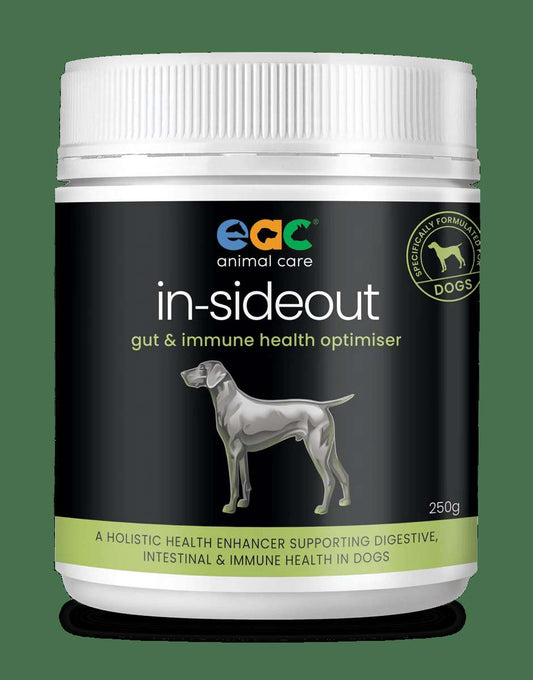


Dog joint supplements: what is in them and how to compare labels
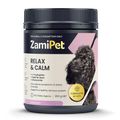
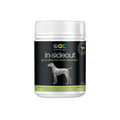
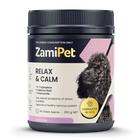
Put two tubs of dog supplements for joints side by side and the front panels look much the same. The back panels are where they differ: which ingredients, from what source, how much per dose, made by whom. This guide covers composition and paperwork only. Whether any of these ingredients does anything for a dog is a separate question, and it has its own article.
The short answer
- This guide covers seven ingredients: glucosamine, chondroitin, green-lipped mussel, MSM, fish-oil omega-3s, undenatured type II collagen and hyaluronic acid. Their commercial sources include crab shell, animal and fish cartilage, mussels and oily fish, and some are made by fermentation or chemical synthesis [3–11].
- In Australia, the APVMA says any product that mentions a specific disease or condition, or refers to preventing, reducing, treating, alleviating or curing one, is considered a veterinary product and requires registration [1].
- A feed-type product that is excluded from registration still has to provide set information on its label or in accompanying material, including an ingredient list, a batch number and expiry date, and the name, address and phone number of a person responsible for marketing it [2].
- Label accuracy cannot be assumed. In a 2002 analysis of 11 oral joint supplements sold for horses, not dogs, measured glucosamine ranged from 63.6% to 112.2% of the label figure and chondroitin sulphate from 22.5% to 155.7% [10]. That is one small study, more than 20 years old, read here from its abstract only, and it tested no dog products.
- This guide does not assess research on outcomes. For that, read our separate research review.

What is in dog supplements for joints?
The descriptions below say what each substance is and where the commercial version comes from. A description of a molecule is not a statement about what a supplement does in a dog.
Glucosamine
Glucosamine is an amino sugar that is widely distributed in nature, and it is the monomer of chitin, which makes up 15% to 40% of the weight of crab shell [4]. The conventional production method breaks down chitin from seafood waste, mainly shrimp and crab shells, using concentrated acids such as hydrochloric or sulphuric acid [4]. A second route uses fungi or bacteria to produce glucosamine by fermentation [4].
Chondroitin
Chondroitin sulphates are glycosaminoglycans found across living organisms, from microorganisms to vertebrates [5]. Current commercial production mostly uses bovine, porcine and avian tissues, as well as marine sources including marine mammals, sharks and other fish [5]. Named raw materials include bovine trachea, chicken keel cartilage and shark cartilage [5].
Green-lipped mussel
Green-lipped mussel is Perna canaliculus, a New Zealand mussel [6]. One 2003 laboratory analysis of mussels from three New Zealand sites, read here from its abstract only, found that omega-3 fatty acids made up 40% to 41% of total fatty acids, with DHA at 19% [6]. In that analysis, freeze-dried mussel held 8.4 g of total lipid per 100 g of dry tissue, and the fat profile did not differ in any major way between frozen and freeze-dried samples [6].
MSM
MSM stands for methylsulfonylmethane, an organosulfur compound that is also called dimethyl sulfone [7]. It occurs in a number of fruit, vegetable and grain crops [7]. Synthetically produced MSM is made by oxidising DMSO with hydrogen peroxide and purified by crystallisation or distillation [7]. These details come from a 2017 review in which one of the three authors is listed as affiliated with Bergstrom Nutrition, a company that manufactures MSM [7].
Omega-3 from fish oil
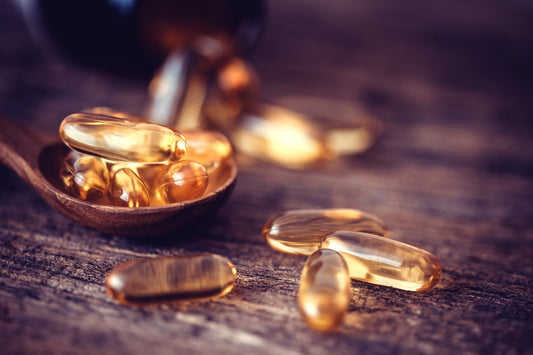
EPA and DHA are the long-chain omega-3 fatty acids, with 20 and 22 carbon atoms respectively [9]. The MSD Veterinary Manual lists oily fish, krill oil and algae oil as the best dietary sources of EPA and DHA, and flaxseed oil as the best source of ALA [8]. Omega-3 supplements come in several chemical forms, including natural triglycerides, ethyl esters and re-esterified triglycerides, according to a fact sheet written about human supplements [9]. The same fact sheet, again about human supplements, says formulations vary widely and that it is important to check product labels for the types and amounts of omega-3s they contain [9]. On a dog product, that means reading the EPA and DHA figures and not only the total weight of oil. There is more on this in our fish oil explainer.
Undenatured type II collagen
Undenatured type II collagen is a powdered ingredient derived from chicken sternum cartilage [3]. The review describes it as made by a patented, low-temperature manufacturing process [3]. It also reports that the undenatured form was found to keep the protein's folded structure intact, while denatured type II collagen did not [3].
Hyaluronic acid
Hyaluronic acid is a linear glycosaminoglycan found in vertebrate tissues, including synovial fluid, skin and rooster comb [11]. Industrially it is produced in two ways: extraction from animal tissue such as rooster combs, or bacterial fermentation [11].
Are natural dog supplements for joints any different?
"Natural" on the front of a pack says less than the ingredient list on the back. Glucosamine from crab shell starts with a natural raw material and is then processed with concentrated acid [4]. Synthetically produced MSM is made from DMSO even though the same compound occurs in crops, according to the manufacturer-affiliated review described above [7]. Hyaluronic acid may come from rooster combs or from a fermentation tank [11]. If the word matters to you, decide what you mean by it and ask the supplier that specific question.
Chew, powder, liquid or tablet: what the format changes
Format changes how the product is given. It does not tell you how much active ingredient is present. Compare products on the amount of each active per dose for a dog of your dog's weight, never on pack size or price per tub.
Format also has a regulatory edge. To be excluded from the requirement to register, the APVMA says a nutritional or digestive animal feed product must be one that is "fed to, and voluntarily consumed by an animal" [2]. For any format, read the full ingredient list and not only the actives.
How Australian law treats dog joint supplements
The regulator here is the APVMA, the Australian Pesticides and Veterinary Medicines Authority. Its guidance describes animal feed products as those intended to be fed to animals for the maintenance of normal health, production and performance [1]. The line is drawn at claims. Any product that mentions a specific disease or condition, or refers to the prevention, reduction, treatment, alleviation or cure of one, is considered a veterinary product and requires registration [1].
The APVMA also says that any supplement represented as being suitable for, used for, or capable of curing a condition or disease will require registration as a complementary animal health product, or in some cases as a pharmaceutical product [12]. It gives examples of complementary animal health products that claim to cure a condition or disease, are not provided by a veterinarian, and require registration. One of those examples is marine extracts such as green-lipped mussel or shark cartilage [12]. So the ingredient alone does not decide a product's status.
Products that stay outside registration are called excluded nutritional or digestive (END) products. To qualify, a product must meet requirements on ingredients, manufacturing, labelling and claims [2]. On claims, the APVMA page states that a product making no therapeutic claims is excluded from the legislation, and that a product making a therapeutic claim is not excluded unless the claim is supported by scientific evidence accessible to the supplier [2]. That is the claims test only. The same page makes exclusion depend on the ingredient, labelling and manufacturing requirements as well [2].
Our article on how dog supplements are regulated in Australia goes further.
How to read the label on a hip and joint supplement
For an excluded product, the APVMA lists ten things the label must contain [2]. Four of them may instead appear in accompanying material, and the last two apply only to certain products. Use the list as a checklist:
- the name of the product
- any signal words required by the Poisons Standard
- instructions for safe handling (may be in accompanying material)
- the application or dosage rate and instructions for use, including the period of use
- an analysis of key ingredients to support claims (may be in accompanying material)
- a list of ingredients (may be in accompanying material)
- a batch number and expiry date (may be in accompanying material)
- the name, address and phone number of a person responsible for marketing the product
- a statement that the product is supplied by a veterinary surgeon, where the product can make claims on that basis
- information required by EU Commission Directive 2008/38/EC, where that applies
Then compare like with like:
- Active amount per dose. Find the milligrams of each active in one chew, scoop or millilitre. A figure given per 100 g or per kilogram has to be converted before two products can be compared.
- Named actives. Each active should have its own amount, not a single total for a blend.
- Source. Shellfish, bovine, chicken, shark, mussel, fish or fermentation. The label or the supplier should be able to say.
- Batch, expiry and contact. All three are on the APVMA list above [2]. If the batch number or expiry date is not on the pack itself, ask where it is recorded.
See also hip and joint supplement ingredients explained.
Quality signals worth checking
The APVMA's manufacturing requirement for excluded products names specific quality systems: APVMA Good Manufacturing Practice, an Australian animal feed industry quality assurance programme such as FeedSafe or FAMI-QS, an Australian Standard for animal feed manufacture (AS 5812-2023 in particular), or a United States or European Union animal feed quality standard [2]. Ask a supplier which of these its manufacturer works under.
The WSAVA Global Nutrition Committee's guidelines on selecting pet foods are about pet foods. Applying their questions to supplements is our reading, not the committee's. The guidelines ask who makes the food, noting that a company may make its own or use a third-party manufacturer ("made for" or "distributed by") [13]. It also asks what the quality control process is for ingredients and finished products, and whether the company provides immediate contact information such as a phone number or email address [13].
In the 2002 analysis of 11 horse products mentioned above, the authors concluded that the oral supplements they tested for horses may not contain ingredients at levels that meet label claims [10]. That finding comes from horse products and was read from the abstract only. Our own searches on 5 October 2026 did not find an equivalent Australian analysis of dog products, which is a statement about our search and not about what exists. Ask whether the supplier holds a certificate of analysis for the batch you are buying.
Questions to ask your vet
- Does my dog need a supplement at all, given its current diet?
- Is anything in this ingredient list a problem alongside my dog's medication or other supplements?
- My dog reacts to chicken, beef, fish or shellfish. Which ingredient sources should I avoid?
- Is the label dose appropriate for my dog's weight and age?
- Is this product APVMA-registered, or is it sold as an excluded product?
Take the pack, or a photo of the full back label, to the appointment.
When to see your vet
If your dog is limping, slow to rise, reluctant to jump or climb, or moving differently from usual, book a vet visit before buying anything. Those signs need an examination and a diagnosis, and a label cannot supply either. See your vet promptly as well if your dog vomits, has diarrhoea or goes off its food after starting any new product, and stop giving the product until you have spoken to them.
Keep the label, note the batch number, and write down the date you opened the pack.
This article is general information, not veterinary advice. Speak to your vet before changing your dog's diet, supplements or medication.
References
- Australian Pesticides and Veterinary Medicines Authority. Animal feed products: acceptable nutritional messages. APVMA. https://apvma.gov.au/registrations-and-permits/chemical-product-registration/acceptable-nutritional-messages (accessed 5 October 2026)
- Australian Pesticides and Veterinary Medicines Authority. Stockfeed and petfood regulation. APVMA. https://apvma.gov.au/registrations-and-permits/chemical-product-registration/stockfeed-petfood-regulation (accessed 5 October 2026)
- Gencoglu H, Orhan C, Sahin E, Sahin K (2020). Undenatured Type II Collagen (UC-II) in Joint Health and Disease: A Review on the Current Knowledge of Companion Animals. Animals (Basel). https://pmc.ncbi.nlm.nih.gov/articles/PMC7222752
- Protity AT, Zhou S (2025). Recent advancement of glucosamine and N-acetyl glucosamine production using microorganisms: A review. Journal of Industrial Microbiology and Biotechnology. https://academic.oup.com/jimb/article/doi/10.1093/jimb/kuaf014/8151571
- Saha SK, Zhu Y, Murray P, Madden L (2024). Future proofing of chondroitin sulphate production: Importance of sustainability and quality for the end-applications. International Journal of Biological Macromolecules, 267. https://www.sciencedirect.com/science/article/pii/S0141813024023821
- Murphy KJ, Mann NJ, Sinclair AJ (2003). Fatty acid and sterol composition of frozen and freeze-dried New Zealand Green Lipped Mussel (Perna canaliculus) from three sites in New Zealand. Asia Pacific Journal of Clinical Nutrition. https://pubmed.ncbi.nlm.nih.gov/12737011/ (abstract)
- Butawan M, Benjamin RL, Bloomer RJ (2017). Methylsulfonylmethane: Applications and Safety of a Novel Dietary Supplement. Nutrients, 9(3), 290. https://www.mdpi.com/2072-6643/9/3/290 (author affiliation: RL Benjamin, Bergstrom Nutrition, an MSM manufacturer)
- MSD Veterinary Manual. Nutritional Requirements of Small Animals. https://www.merckvetmanual.com/management-and-nutrition/nutrition-small-animals/nutritional-requirements-of-small-animals (accessed 5 October 2026)
- National Institutes of Health, Office of Dietary Supplements. Omega-3 Fatty Acids: Fact Sheet for Health Professionals. https://ods.od.nih.gov/factsheets/Omega3FattyAcids-HealthProfessional/ (accessed 5 October 2026)
- Ramey DW, Eddington N, Thonar E, Lee M (2002). An analysis of glucosamine and chondroitin sulfate content in oral joint supplement products. Journal of Equine Veterinary Science. https://www.sciencedirect.com/science/article/abs/pii/S0737080602701251 (abstract)
- Sze JH, Brownlie JC, Love CA (2016). Biotechnological production of hyaluronic acid: a mini review. 3 Biotech. https://link.springer.com/article/10.1007/s13205-016-0379-9
- Australian Pesticides and Veterinary Medicines Authority. Animal feed products. APVMA. https://apvma.gov.au/registrations-and-permits/chemical-product-registration/animal-feed-products (accessed 5 October 2026)
- WSAVA Global Nutrition Committee (2021). Guidelines on Selecting Pet Foods. World Small Animal Veterinary Association. https://wsava.org/wp-content/uploads/2021/04/Selecting-a-pet-food-for-your-pet-updated-2021_WSAVA-Global-Nutrition-Toolkit.pdf
Tags:
Previous
Hip and joint supplements for dogs: glucosamine, chondroitin, green-lipped mussel and MSM explained
Next
Supplements for older dogs: what owners should know first